Introduction: What Is Payment Processing?
Introduction: What Is Payment Processing?
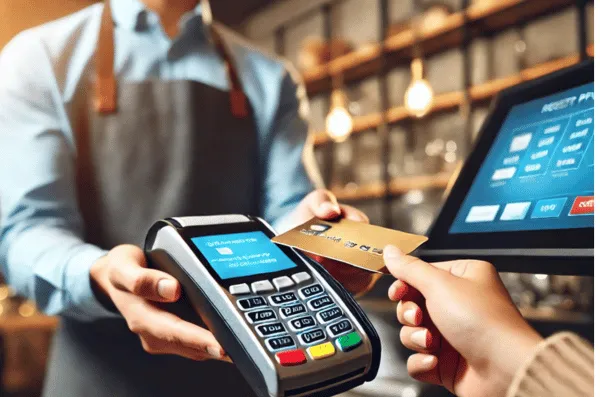
Have you ever wondered how businesses accept credit cards, debit cards, or online payments? That’s where payment processing comes in! It’s the system that allows money to move from a customer’s bank account to a business’s account when they buy something.
Choosing the right merchant service provider (or payment processor) is important because it affects how much businesses pay in fees and how fast they get their money. In this blog, we’ll break down:
✅ How payment processing works
✅ The different pricing structures businesses should know
✅ How to choose the best merchant services for your businessLet’s get started! 🚀
How Payment Processing Works (In Simple Steps!)
When a customer swipes a card, taps their phone, or enters payment details online, a few things happen behind the scenes:
1️⃣ The Customer Pays – They use a credit card, debit card, or digital wallet (like Apple Pay).
2️⃣ The Payment Processor Sends Info – The payment details go through a system to check if there’s enough money.
3️⃣ The Bank Approves or Declines – The customer’s bank says “yes” or “no” based on their funds.
4️⃣ The Money Moves – If approved, the business gets paid (usually in 1-2 days).That’s it! But businesses don’t get the full amount—they pay a small fee to the payment processor. Let’s talk about those fees.
Understanding Payment Processing Fees
Payment processors charge businesses a fee every time they accept a payment. There are three common pricing structures:
1. Flat-Rate Pricing (Simple & Easy to Predict) 🏷️
The business pays a fixed percentage per transaction.
Example: Square and PayPal charge around 2.6% + 10¢ per transaction.
Best for: Small businesses with lower transaction volumes.
💡 Example: If a customer buys a $100 product, and the flat-rate fee is 2.6% + 10¢, the business keeps $97.30.
2. Interchange-Plus Pricing (More Transparent) 💡
The fee includes interchange fees (charged by card networks) + a small markup from the processor.
Example: A typical rate might be 2.2% + 15¢ per transaction.
Best for: Medium to large businesses that process lots of payments.
💡 Why choose this? It’s usually cheaper than flat-rate pricing if a business has high sales volume.
3. Tiered Pricing (Common but Can Be Expensive) 🎭
Transactions are categorized into three tiers:
🔹 Qualified – Lowest fees (e.g., debit cards, basic credit cards).
🔹 Mid-Qualified – Higher fees (e.g., rewards credit cards).
🔹 Non-Qualified – Highest fees (e.g., business cards, international cards).Example: You may pay 1.5% for a debit card but 3.5% for a business credit card.
Best for: Businesses that primarily accept debit or standard credit cards.
💡 Why be cautious? Some processors use tiered pricing without clear cost breakdowns, making it hard to predict fees.
4. Dual Pricing (Encourages Cash Payments) 💵💳
Customers see two prices:
✅ A lower price for cash payments.
✅ A higher price for credit/debit card payments.Example: A coffee shop might charge $5 for cash and $5.25 for card transactions to offset processing fees.
Best for: Retail stores, restaurants, and service-based businesses that want to reduce card processing costs.
💡 Is it legal? Dual pricing is legal in all 50 U.S. states, but always check local laws before using it.
How to Choose the Best Merchant Services for Your Business
Not all payment processors are the same! Here’s how to pick the best one:
✅ 1. Look at Fees & Pricing
If you process small transactions, go for flat-rate pricing (like Square).
If you do large sales, interchange-plus or subscription pricing saves money.
✅ 2. Check the Payment Methods They Accept
Can customers pay with credit cards, debit cards, and digital wallets?
If you sell online, does it support 3rd Party Integration so your not stuck paying the high Flat Rate pricing, Buy Now, Pay Later (BNPL) options?
✅ 3. Make Sure It’s Secure 🔒
Look for fraud protection, PCI compliance, and chargeback prevention tools.
If a customer disputes a charge, does the processor help you?
✅ 4. Check Integration with Your Business Tools
Does the processor work with your POS system, website, or accounting software (like QuickBooks)?
If you use WooCommerce or Go High Level, make sure your processor is compatible.
✅ 5. Customer Support Matters
Live chat, texting, phone, and email support should be available when you need it.
A good provider helps with disputes, refunds, and technical issues fast.
💡 Pro Tip: Always read the fine print! Some processors lock businesses into contracts with cancellation fees.
Best Payment Processors for Different Business Types
When choosing a payment processor, many businesses opt for quick and easy solutions like Stripe, Square, or PayPal because they require little setup and no upfront underwriting. However, there’s a major risk—you don’t actually own the merchant account, you’re just borrowing it.
Renting vs. Buying: The Payment Processor Analogy 🏠
Think of it like renting vs. buying a house:
Using Stripe, Square, or PayPal = Renting
✅ Easy approval, fast setup, no long-term commitment.
❌ The company owns the merchant account—you’re just borrowing it.
❌ If there’s a problem (like a chargeback spike or high transaction volume), they can freeze or shut down your account while they “verify” your business.Having an Underwritten Merchant Account = Buying
✅ The account is set up and approved for your specific business model upfront.
✅ No surprises—since the processor understands your business, you won’t suddenly lose access to your money.
✅ You own the account rather than depending on a third party’s rules.💡 Bottom Line: If you want stability and control, it’s better to get a fully underwritten merchant account from the start rather than relying on an aggregator that can cut you off without warning.
Final Thoughts: Choosing the Right Payment Processor
Picking the right merchant service provider can help businesses save money and run smoothly. Here’s what to remember:
✅ Know your pricing structure: Flat-rate is easy, but interchange-plus saves money over time.
✅ Make sure it accepts all the payment types you need (credit cards, Apple Pay, Google Pay etc.).
✅ Security is key! Fraud protection and PCI compliance keep your business safe.
✅ Check for hidden fees and contracts before signing up.🚀 Next Step: 📩 Get my Free Guide to 0% Credit Card Fees
Stay Connected with Us!
🔗 Follow along on social media:
🎵 TikTok
🐦 X (Twitter)
▶️ YouTubeLet’s connect and keep the conversation going! 🚀
What’s Next?
Did this guide help? Would you like me to write about how to reduce payment processing fees next? Let me know! 🚀


