Dual Pricing Is Now Legal Nationwide: Smart Merchants Pass Fees to Customers the Right Way
Dual Pricing Is Now Legal Nationwide: Smart Merchants Pass Fees to Customers the Right Way
Discover how dual pricing—offering cash and card prices—is now fully legal across all 50 states. Learn the difference from surcharging, best practices, legal requirements, and why it’s the superior, compliant strategy for merchants looking to reduce credit card fees.
💳 What Is Dual Pricing?
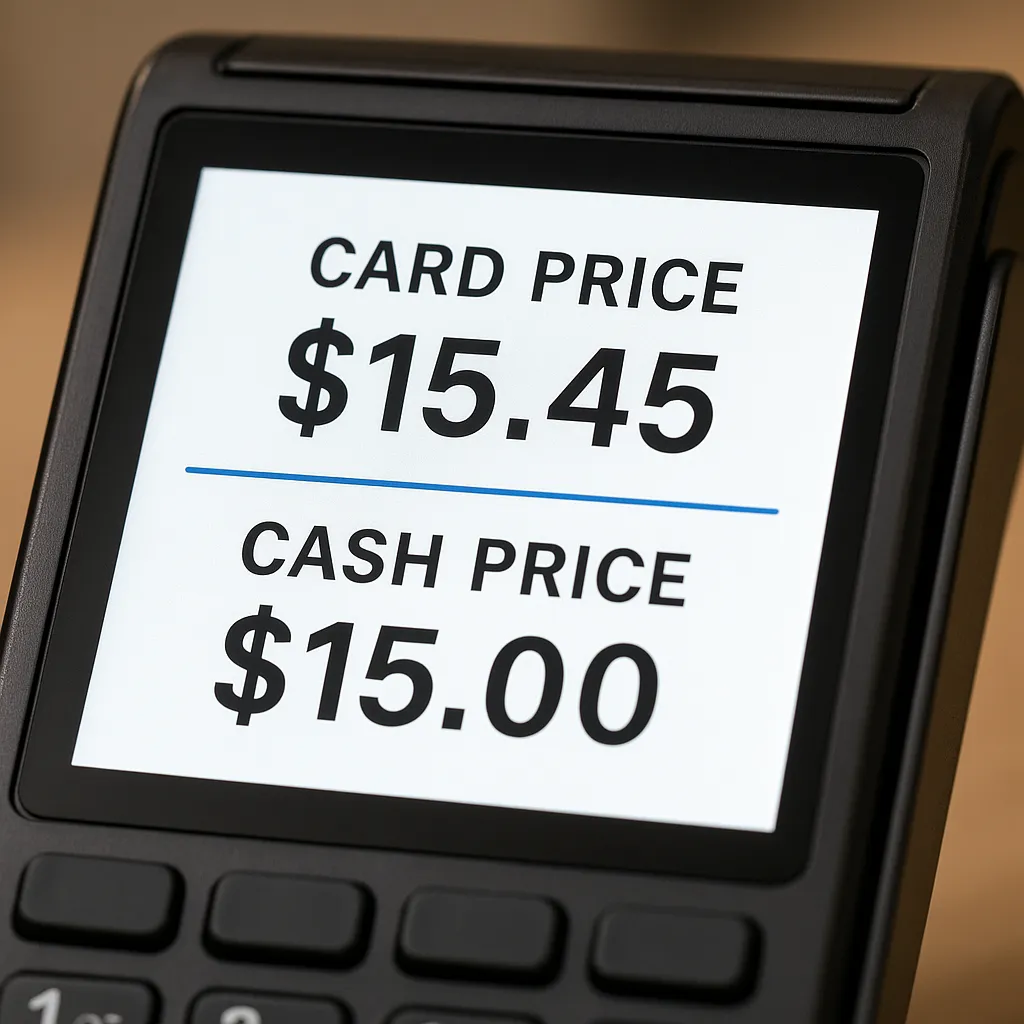
Dual pricing means offering customers two price options:
Cash Price: Lower, no processing fee
Card Price: Slightly higher, includes your merchant processing cost
It’s not a “fee” added at checkout. Instead, it’s a built-in pricing model that has long been used by gas stations—and now, it’s available to all merchants in every state.
⚖️ Dual Pricing vs. Surcharging: What’s the Difference?
Customer View:
Dual Pricing: Presented as a cash discount
Surcharging: Seen as an added fee or penalty
Legality:
Dual Pricing: Legal in all 50 U.S. states
Surcharging: Banned or restricted in several states, including California, New York, Connecticut, and Maine
Best For:
Dual Pricing: Ideal for retail stores, restaurants, and service-based businesses
Surcharging: Only applicable where legally permitted and heavily regulated
Surcharging is still illegal or tightly restricted in several states. In contrast, dual pricing is fully legal, federally protected, and endorsed by major card brands—making it the safer and more strategic choice for most merchants.
📜 Legal Backing: Why It’s 100% Legal
Truth in Lending Act (TILA) – Passed in 1968, protects the right to offer cash discounts.
Durbin Amendment (2010) – Affirms merchant rights to control fee structures.
Expressions Hair Design v. Schneiderman (2017) – U.S. Supreme Court ruled dual pricing communication as a First Amendment right.
Visa/Mastercard Rules – They support dual pricing models when done transparently.
✅ As of 2025, dual pricing is legal in all 50 U.S. states and territories.
✅ Why Dual Pricing Is Superior
Works everywhere – No patchwork laws to worry about.
Customer-friendly – No “penalty” fee. Just a clear choice.
Compliant with card networks – When implemented correctly, avoids penalties or shutdowns.
Saves you money – Typical savings: $10,000–$30,000+ per year for mid-sized businesses.
🚫 The Wrong Way vs. The Right Way
❌ Don’t:
Call it a “surcharge” if your state restricts it.
Show one price and sneak in fees at checkout.
Skip signage and receipts—network violations cost you.
✅ Do:
Display cash and card prices clearly.
Print both prices or discounts on receipts.
Train staff to explain pricing positively.
🛠️ How to Set Up Dual Pricing (the RIGHT Way)
Upgrade your POS system to support dual pricing.
Price everything at card price; offer discount for cash.
Post signage at your entry and counter explaining the discount.
Show the discount on receipts.
Download our free setup guide and follow the exact steps for 100% compliance.
👉 Download Your Free Guide to Eliminate Credit Card Fees the Right Way
💼 Real Business Example
A retail shop processing $500,000 annually in card sales:
At 3% processing = $15,000 in annual fees
With dual pricing, 50% of customers pay cash
Savings = $7,500+ per year—pure profit
❓ Frequently Asked Questions
Is this legal in my state?
Yes. Dual pricing is federally protected and legal in all 50 states.
Can I use dual pricing AND surcharging?
No. Card brands prohibit mixing models. Dual pricing is cleaner and compliant.
How do I explain it to customers?
Try: “We offer a discount for cash. Our posted price includes card processing.”
Can I charge any amount extra for cards?
With dual pricing, there’s no cap—unlike surcharging which is limited by law and card networks.
🧾 Ready to Eliminate Credit Card Fees?
Dual pricing helps every business—from salons to service providers—stop absorbing credit card fees and stay legally protected.
👉 Click here to download your Free Dual Pricing Setup Guide
Learn the exact steps to stay compliant, reduce costs, and increase your profits.


